








Businesses are moving at a fast pace towards new ways of managing their technology. Managing the data of customers, managing their day-to-day activities and even developing digital products is not possible without a robust IT infrastructure today. However, maintaining the traditional system becomes expensive and hard to manage as well for growing companies.
This is the place where Cloud Services in India play a big role. Rather than being limited with physical servers and other infrastructure, businesses can utilize computing resources, applications, databases and storage through the Internet. They become able to handle their workloads more effectively, adjust to new requirements and use the power of technology.
Increased usage of digital platforms, artificial intelligence, online services and data-driven operations pushes Indian companies towards using Cloud Computing Services in India. This article talks about various types of cloud computing, Benefits of cloud computing for Indian businesses, migrations and prices among other factors.
What Are Cloud Services?
Cloud services are related to computing and technology that are provided over the Internet. Instead of buying and owning the entire hardware and software, firms can access the infrastructure, platforms, applications, and storage from cloud service providers.
This means accessing technology whenever you want without owning and managing all the pieces of the underlying infrastructure.
For instance, an online business can use cloud infrastructure for hosting its website, storing its product data, processing customer orders, and handling traffic during sales seasons. In case the number of visitors increases, the computing resources can be increased accordingly.
Modern Cloud Infrastructure Services usually consist of computing resources, data storage, networking, databases, application hosting, backup services, and security.
The greatest benefit is flexibility. Firms can choose the necessary resources, modify them according to their needs and save money on infrastructure that is not used much.
What Is the Significance of Cloud Computing in Business in India?
There has been an increasing level of competition in the digital world for Indian companies. Faster service delivery is expected from them, workers have to access information from diverse locations and there has to be management of growing information. The traditional IT infrastructure makes fulfilling the needs difficult especially when organizations want to expand rapidly.
Here come in handy the Cloud Computing Services in India which bring about greater flexibility in dealing with the needs of business. Organizations can use cloud computing to update applications, enable collaboration, provide robust disaster recovery and facilitate new business models. Organizations do not make consistent investments in the physical infrastructure but can gain access to the computing resources on the basis of requirements.
The benefits are not only for big corporations, smaller companies can also get advantage of cloud computing services in running their businesses even if they lack a proper IT infrastructure within the company. The understanding of how the use of cloud services leads to growth in business starts by understanding how technology and business flexibility interact with each other.
Different Types of Cloud Computing Services
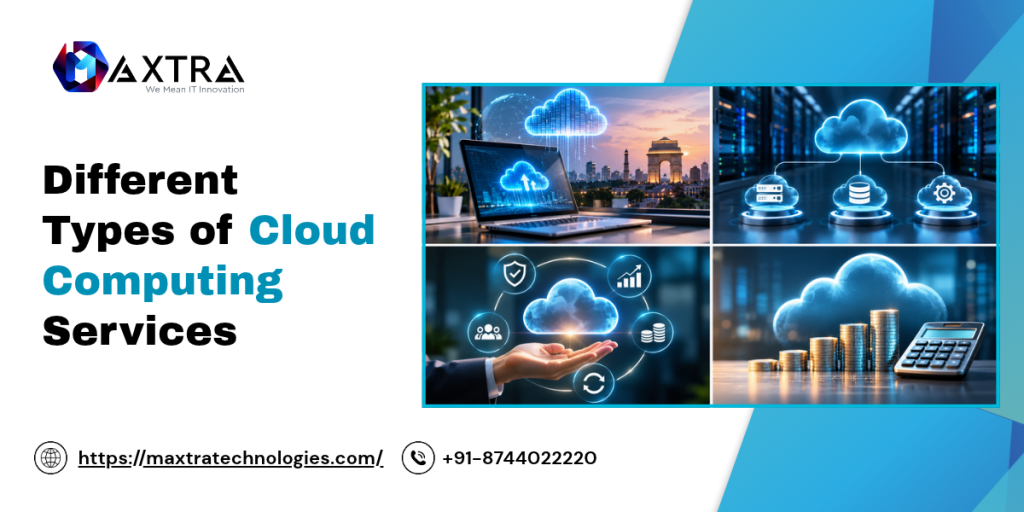
All organizations do not have similar infrastructure requirements. A newly formed organization which has launched its first application may require a completely different structure than a financial organization which deals with confidential customer data.
Knowledge about the available deployment models enables companies to select an option according to their specific needs.
1. Public Cloud
Public cloud offers computing resources using infrastructure that is provided by third-party cloud providers. Companies get access to various computing resources like servers, storage, databases, and more, without having to own any physical infrastructure for that purpose.
The main benefits of this type of cloud environment are:
- Efficient resource allocation
- Reduction in cost of infrastructure
- Use of a variety of cloud services
- Scalability if there is an increase in business requirement
Public clouds are generally used for web hosting, software development, data storage, and business applications.
2. Private Cloud
The private cloud is intended exclusively for use by one organization. It may have its infrastructure housed on-site or even outsourced to a third-party provider. This approach enables enterprises to have better control over their computing infrastructure.
For organizations with particular requirements in terms of security, governance or infrastructure, this option can be explored. Some of the common uses of the private cloud include enterprise workloads, internal business applications, financial functions and customized infrastructure controls.
3. Hybrid Cloud
It is possible to combine private infrastructure and resources in a public cloud. In this regard, a business organization would be capable of managing its workloads in terms of its needs.
As an illustration, one can state that some applications that need security would remain within the premises of private infrastructure while other applications for customers would remain in the public cloud infrastructure.
4. Multi-Cloud
In multi-cloud environment, there is usage of service from two or more cloud providers. For example, in an organization, service from the first provider might be used for application hosting, second provider might be used for analytics, and yet a third might be used for some AI tasks. The benefits of using multi-cloud include ability to get access to advanced technologies and prevent dependency on one particular provider.
Public vs Private vs Hybrid Cloud: Which Is Better?
In terms of Public Vs private Vs hybrid cloud, companies must think about security needs, budget for their infrastructure, workloads, and future scaling up.
| Cloud model | Best suited for | Main advantage |
| Public cloud | Startups and growing businesses | Flexible resources |
| Private cloud | Organizations with specific control requirements | Greater infrastructure control |
| Hybrid cloud | Enterprises with mixed workloads | Flexible deployment |
| Multi-cloud | Businesses using multiple providers | Provider flexibility |
There is no ideal deployment model for all organizations. Everything depends on how the organization functions and what it expects from its technological infrastructure.
Top Benefits of Cloud Computing Services for Indian Businesses
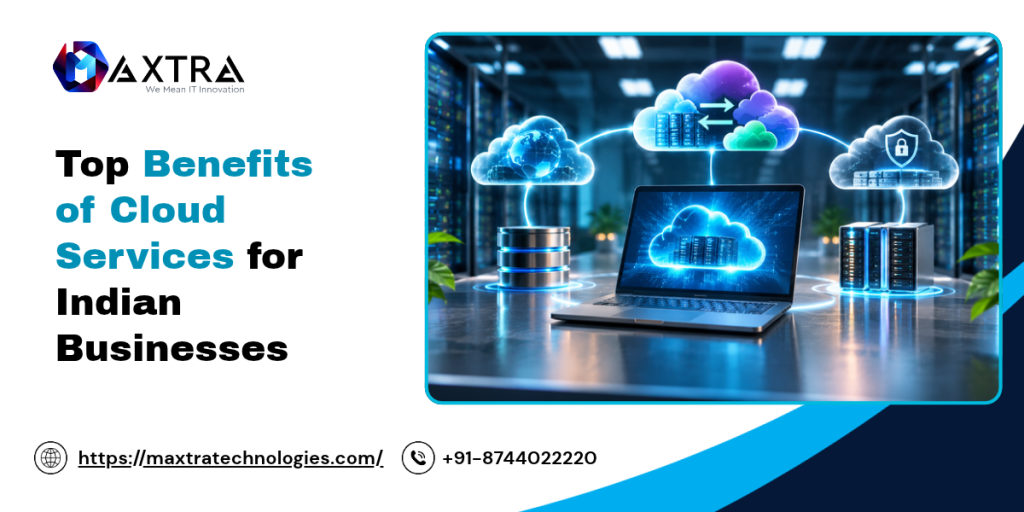
There is scope for improving more than infrastructure management with the adoption of cloud services. Properly planned implementation can help business productivity, customer experience and technology planning as well.
Let us try and discuss some of the key Benefits of Cloud Computing in Indian Business context.
1. Improves Cost Management
The running of physical servers needs purchase of hardware, maintenance, power and cooling of equipment, software and technical support. Cloud Computing provides another choice that allows enterprises to acquire resources as per requirement.
Instead of investing in large amounts on infrastructure, firms can opt for consumption based billing schemes provided by the cloud providers. It becomes easier to plan budgets with this arrangement in case of startups and businesses whose workloads are not fixed.
But cost saving does not come with cloud adoption itself. Over-utilized resources and poorly configured environments may cause monthly costs to rise.
2. Scalability and Flexibility
Business needs do not stay the same. The online store will have high demands for traffic during festive discounts, while the expanding software business may require more computing power as the customer base grows.
A cloud-based infrastructure facilitates the easy management of resources as per requirements. Businesses can add computing resources when they need to and cut down when there is low workload. nIt saves organizations from having to buy and install more hardware constantly.
3. Enhanced Security Management
The protection of information in businesses is one of the major worries of companies that operate in digital environments. The modern cloud systems provide security tools like encryption, identity management, access control, monitoring and backup services. Those tools can be used by companies to develop their security measures, as long as the right use of those tools will be made.
Cloud security measures for companies must include appropriate access, data encryption, security monitoring, backups and assessments. But cloud security is not a single responsibility. Cloud companies secure different components of the infrastructure. Customers are responsible for others, like account access, app security, data settings and access management.
4. Business Continuity & Disaster Recovery
Unexpected events such as system crashes, malware attacks and disasters could disrupt business operations. Cloud disaster recovery solutions could help companies recover from any disruptions by securing the company’s vital data.
Companies have the option of making backups, workload replication and recovery based on their operational needs. Disaster recovery depends on various factors such as planning, testing and recovery time objective.
5. Fast digital transformation
Cloud architecture enables organizations to implement modern innovation without having to create everything from scratch. Companies can utilize the cloud platform to create apps, integrate business systems, process data and experiment with new technologies.
Development teams can also make use of managed databases, automation services and app deployment platforms. This may minimize time wastage on the infrastructure side and enable teams to concentrate on product innovation.
Popular Cloud Computing Services and Technologies
The cloud environment has a number of platforms that provide infrastructure, development tools, databases, analytics and enterprise solutions. Knowing these technologies allows companies to choose the best options according to their needs.
- Amazon Web Services (AWS)
- Microsoft Azure
- Google Cloud Platform
- Cloud-Based AI and Machine Learning
- Cloud Application Development
Some examples of the use cases are customer support automation, prediction analysis, recommendation systems, and document processing.
It can contribute to increased cooperation between developers and operators, as well as app maintenance and scaling.
How Cloud Computing Is Changing Various Sectors in India
Cloud technology is not confined to information technology companies only. Organizations from various industries have embraced it to enhance their business and offer a more enhanced digital experience.
Healthcare
Healthcare organizations deal with large amounts of information that are highly confidential in nature such as patient records, diagnosis, and appointments. Cloud-based systems may help healthcare organizations organize their information, facilitate digital appointment scheduling, and allow collaboration between authorized professionals.
They may also be used in telemedicine portals and healthcare applications. Given the sensitive nature of information in the healthcare industry, healthcare organizations need to be very careful while embracing cloud-based solutions.
Banking and Finance
Banks carry out large transaction volumes each day. The cloud can offer analytics, application transformation, fraud management, and digital banking capabilities. In choosing the cloud deployment model, financial organizations need to consider regulatory compliance, data protection, operational resilience, and security controls.
Retail and E-commerce
E-commerce sites require infrastructure that can handle varying amounts of customer traffic, product information, payment transactions, and order management. Cloud applications can be used by retailers to handle product catalogues, customer engagement, inventory management, and business analytics.
An e-commerce firm can scale its infrastructure during a large promotional drive and then scale down when traffic falls to normal levels.
Education
In educational establishments more and more often cloud technologies are applied in order to manage different education resources such as learning management, interaction between teachers and students, assessing and other issues.
Logistics & Transportation
For logistics firms up-to-date information about shipment data, inventory, delivery planning and vehicle operation is very important. Cloud computing technologies can assist in integrating various operational processes providing people with access to information.
Cloud Migration Strategy: How Businesses Can Move to the Cloud
Migration of business applications and data to the cloud is more than simply moving files from one location to another. The first step in the development of a good Cloud migration strategy for an enterprise is an assessment of the existing infrastructure and setting of business priorities. Here is a process that businesses should consider.
Step 1: Current Infrastructure Assessment
Begin by assessing your current servers, apps, database, storage and network. Determine which apps must be maintained, which systems need upgrading and which workloads should be migrated.
Step 2: Choose a Cloud Strategy
Choose a deployment strategy depending on your business needs. The most suitable cloud deployment model out of public, private, hybrid or multi-cloud. Think about workload performance, sensitive data, applications dependencies, scalability and budget.
Step 3: Specify Security and Compliance Needs
Prior to migrating, determine what security controls your workloads need. It may include encryption, identity and access management, backups, monitoring and data retention rules.
Indian companies processing personal data need to assess their obligations under the Digital Personal Data Protection Act, 2023 and related DPDP Rules, 2025.
Step 4: Develop a Migration Plan
Develop a migration plan which will specify application priorities, dependencies, timelines and responsibilities. Some applications may migrate without any changes, whereas others may require some adjustments. Phased approach may help to minimize the risks of disruption and testing.
Step 5: Test & Implement
After migration, test apps, databases and integration. Do testing to check performance of apps, data validation, security configurations, backup of data and user access. Workload will go live only after testing is successful for all criteria mentioned above.
Step 6: Monitor & Optimize
Cloud management is continuous even after cloud migration. Companies need to continuously monitor resource consumption, performance, availability, security incidents and infrastructure costs.
Through regular optimization, companies can reduce unnecessary resource consumption and make sure that the environment meets the company’s requirements.
What is the Cost of Cloud Services in India?
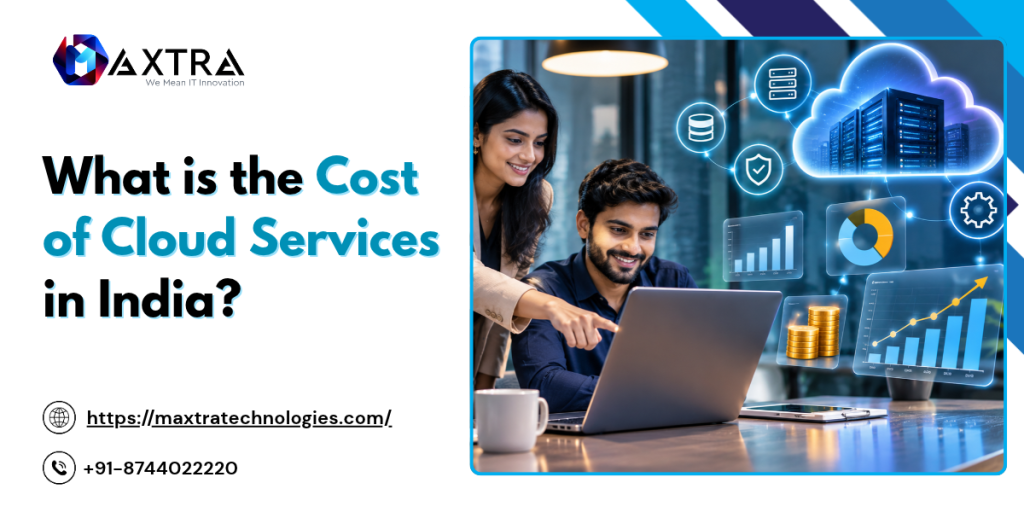
Cost information of cloud computing services in India needs to be known before opting for any infrastructure model. The cost does not have a fixed value for all organizations because there are differences in workload and requirements. A number of factors influence the cost of ownership.
- Computing capacity: Computing capacity of virtual machines, processors, memory and special computing capacity determines the cost of infrastructure.
- Data storage: Amount of data stored, type of storage, backup and storage duration of data affect the cost.
- Data transfer: Transfer of data from cloud infrastructures or through networks may attract additional costs.
- Database services: The database platforms and its performance configurations determine the cost.
- Security & monitoring: Advanced security & monitoring solutions increase the cost.
- Technical support management: Technical support for infrastructure management by companies.
In case of startups, having a smaller cloud infrastructure will do. In the case of large organizations, they will need to have a higher level of infrastructure apart from cloud infrastructure and other security options. Before making any choice of cloud infrastructure, one must ensure that they have made the right calculation and comparison of prices.
How to Select a Proper Cloud Service Provider in India
Awareness about the procedure of selection of a cloud service provider is important in order to build a sophisticated technological environment. An appropriate cloud provider knows all about your infrastructure needs, goals and future expansion plans for your company. Some of the things you must bear in mind are:
1. Knowing Your Business Requirements
First, find out what type of applications you want to run, how much data you want to store and the performance levels required by your business. A software development company would require flexibility while an enterprise would require governance and integration.
2. Evaluating Security Capability
Evaluate security features, authentication possibilities, encryption features, monitoring tools and backup resources. It is also necessary to determine who is going to be accountable for security issues and what tasks are going to be done by your firm.
3. Scalability Check
Select a platform that would allow the growth of your business. Determine whether you will be able to scale computing resources, storage, and other services without any change in infrastructure.
4. Evaluating Performance and Reliability
Evaluating commitments of availability, placement of infrastructure, network and disaster recovery services offered by the cloud provider. Consider performance for your work loads.
5. Comparing Price and Support Options
Look beyond the initial price assessment. Look at data transfer prices, storage pricing, fees related to resource utilization and support. Technical support for infrastructure and applications issues needs to be considered.
6. Evaluating Technical Expertise
A good cloud service provider knows the requirements of your business and assists in planning, migration, implementation and optimization.
This is particularly applicable to Cloud Consulting Services in India, where technical expertise can help businesses avoid unnecessary complexities in their infrastructure and technology decisions.
Why choose Maxtra Technologies for Cloud Solutions?
The choice of a cloud solution is much more than just choosing an environment or moving your apps onto a cloud server. You need to know your infrastructure, your apps, security issues and many other things. The aim of Maxtra Technologies is to help you make right choices based on your needs and possibilities.
Whether it is choosing your first cloud solution or upgrading apps and infrastructures, you must always consider the importance of picking the correct solution. Every business that would like to get Cloud Solutions for Businesses must also consider how the three concepts interact with one another.
In our opinion, the Cloud Solutions for Businesses must be chosen according to the following criteria:
- Business-oriented planning: Understand what you’re working on and make suggestions about the structure.
- Scalable architecture: Select the resources capable of handling your growing workloads.
- Application modernization: Consider the apps and see which of them can be modernized.
- Security: Think about the access control, data protection, monitoring and other security features.
- Performance improvement: Examine the usage of resources and apps.
- Management: Make plans concerning maintenance and improvement of your infrastructure.
Similarly, organizations looking for Enterprise Cloud Solutions need infrastructure that can support complex workloads, integrations, governance requirements and long term expansion.
Conclusion
The cloud technologies are changing the process of designing and using the digital infrastructures by business companies. Regardless whether it is a startup creating applications or a company wishing to improve the existing infrastructure, there are many new solutions in cloud computing that will help to overcome the problems of modern businesses.
However, the successful use of cloud computing cannot be based only on choosing the most popular cloud platform. On the contrary, it must involve the comprehensive analysis of companies’ workload, security requirements and monitoring of their digital infrastructures.
With the right strategy, cloud computing will allow businesses to become more flexible and efficient, as well as to be ready for new innovations like artificial intelligence and analytics. In view of the fast development of the digital market of India, it is important to have the right cloud infrastructure.
Do you want to change your company’s infrastructure? Contact Maxtra Technologies and find out what cloud computing can do for your company!
Frequently Asked Question
Q) What are Cloud services in India?
Cloud services are those computing services which enable companies in India to gain access to the servers, storage space, databases, applications and all other IT related facilities via the internet.
Q) What is the cost of cloud computing in India?
It varies according to the amount of computing power, storage space, band-width, databases and security measures. Companies need to project their resource requirements and then evaluate their cost of operation.
Q) Which cloud platform should be used by businesses?
There are many cloud platforms available, like AWS, Microsoft Azure and Google Cloud, etc. The best choice would depend upon the technical environment of the business, its needs, budget and security issues.
Q) Is cloud computing safe for companies in India?
Cloud computing is capable of delivering good levels of security using encryption, identity management, access control and monitoring. But security also relies on configuration, application security, user access and monitoring.
Q) What is the difference between public, private and hybrid cloud?
The public cloud uses the infrastructure provided by the external cloud. The private cloud is used exclusively for one organization, whereas the hybrid cloud uses both private and public cloud infrastructure.