







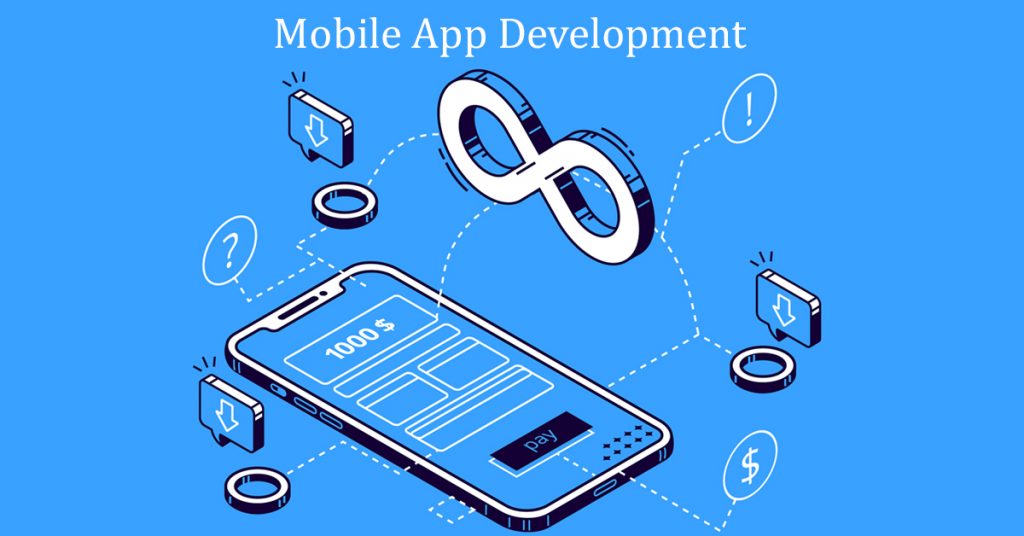
Mobile app development companies are transforming healthcare by enabling accessible, efficient, and patient-centric digital solutions.
From online consultations to medical records and appointments, mobile apps have transformed healthcare delivery, especially after COVID-19 increased demand for remote healthcare services.
With a fast-growing market, healthcare apps are shaping the future of digital health.
How A Custom Mobile App Development Company Benefits The Healthcare Industry?
A custom mobile app development company builds healthcare apps that go beyond appointment scheduling by integrating AI, Blockchain, and IoT.
These advanced solutions enable end-to-end communication, smart consultations, and efficient healthcare operations. As a result, they create new opportunities for healthcare providers and patients.
Key Advantages of Mobile App Development in Healthcare
Enabling Chat Consultations
Before the technological revolution, patients had to physically visit doctors whenever they needed a consultation.
Today, modern healthcare apps allow users to book appointments online, consult doctors virtually, and order prescribed medicines for doorstep delivery.
Therefore, patients can access essential healthcare services directly from the convenience of their smartphones.
Maintain Database Repository
A custom mobile app development company can build an app with a centralized repository for consultations and interactions between doctors and patients.
Additionally, the app can store this information in a structured database. As a result, healthcare professionals can access reports, diagnoses, and patient histories with just a few clicks.
Furthermore, centralized data management helps doctors review relevant patient information quickly and support more informed healthcare decisions.
Higher Accuracy in Diagnosis
Fitness trackers and health sensors have made patient monitoring easier. For example, doctors can remotely access information about patient behavior, activity, and well-being.
Consequently, healthcare professionals can use real-time health data to understand patient conditions and support faster, more accurate diagnoses.
Moreover, this growing demand for digital healthcare is encouraging businesses to develop custom healthcare apps for both doctors and patients.
How Has Technology Enhanced Mobile App Development Services?
A custom mobile app development company leverages cutting-edge technology to develop apps that improve convenience for both patients and doctors. Moreover, these solutions can streamline healthcare processes while making essential services more accessible.
Let’s explore how mobile app development services use modern technologies to build high-quality healthcare apps:
Technologies Powering Modern Healthcare Apps
Incorporation of Augmented Reality
First, Augmented Reality (AR) enables doctors to simulate procedures and evaluate their viability without performing them on patients.
As a result, AR can enhance doctors’ expertise and help them perform procedures more effectively.
Blockchain
Similarly, Blockchain has applications that extend far beyond its association with Bitcoin. The technology uses a peer-to-peer network to store transactions in an encrypted and tamper-resistant format.
Therefore, healthcare organizations can use Blockchain to store patient records and diagnoses digitally and securely.
Furthermore, Blockchain can improve data integrity by providing healthcare organizations with a secure method for managing sensitive information.
Custom Analytical Insights
In addition, a centralized database enables healthcare providers to generate analytical reports through specialized software.
These reports can help healthcare professionals identify disease and illness patterns while improving resource management.
Moreover, analytical insights help healthcare organizations manage large volumes of patient records more efficiently. As a result, healthcare professionals can use data more effectively when planning services and making operational decisions.
Internet of Things
Another important technology is the Internet of Things (IoT). IoT enables smart refrigerators, ovens, air conditioners, and other connected devices to establish internet connections and transmit data across networks.
For example, IoT allows doctors to collect relevant information from activity trackers, heart-rate monitors, SpO2 trackers, and other connected healthcare devices.
Consequently, healthcare professionals can use this information to understand patient conditions better and support more informed diagnoses.
Artificial Intelligence
Finally, Artificial Intelligence (AI) plays an increasingly important role in healthcare. Research has explored how AI can help identify life-threatening diseases and predict the probability of developing certain conditions later in life.
Furthermore, AI enables doctors to make more data-driven decisions and can support improvements in diagnostic accuracy.
As AI systems continue to evolve, healthcare organizations can explore new applications for this technology across diagnosis, monitoring, and patient care.
Overall, AI and Blockchain continue to expand their applications, and custom mobile app development companies can integrate these technologies into modern healthcare solutions.
At the same time, rising demand for mobile app development services will continue to automate healthcare processes and support a more technology-driven industry.
Conclusion
The healthcare industry continues to adapt to rapid technological changes and the digital transformation that mobile app development services bring.
Nevertheless, healthcare organizations can gain significant benefits by adopting technologies such as Blockchain, AI, AR, and IoT in their mobile applications.
Moreover, custom mobile app development companies are helping transform healthcare by creating solutions that support doctors, healthcare aggregators, and patients.
Today, mobile healthcare apps assist doctors, help healthcare aggregators build their brands, and improve patient convenience.
Ultimately, as healthcare organizations adopt more digital solutions, automation and modern technology will play an increasingly important role in delivering efficient and accessible healthcare services.