







Have you seen a USB hub that connects multiple devices and transfers power or data between them? Similarly, the Internet of Things (IoT) connects devices and enables them to exchange data. In fact, IoT is not a completely new technology. Instead, it combines several existing technologies to create connected systems. As a result, this approach has led to a defined structure known as IoT architecture.
Today, IoT continues to expand across automation, healthcare, retail, manufacturing, logistics, and other industries. For example, retail stores can use sensors and scanners to collect information. Next, gateways transfer that data to cloud platforms, where systems process it and turn it into useful information for end users.
Therefore, understanding IoT architecture can help businesses see how connected devices collect, transfer, process, and analyze data.
What Is IoT Architecture?
IoT architecture describes how connected devices communicate and exchange data. Generally, it connects physical devices, gateways, networks, cloud platforms, and data analytics.
In simple terms, the IoT data flow looks like this:
Things → Gateway → Cloud → Data Analysis → Meaningful Insights
Each layer performs a specific function. Together, these layers create a connected ecosystem that can support automation and data-driven decision-making. As a result, businesses can connect physical operations with digital systems more effectively.
1. Sensors and Connected Devices
First, the IoT architecture starts with physical devices, sensors, and other connected objects. These devices collect information from their surroundings.
For instance, sensors can capture:
- Location
- Movement
- Temperature
- Object identity
- Pressure
- Health-related parameters
- Environmental conditions
Once sensors collect physical information, they convert it into digital data. Then, they send that data through communication technologies such as Bluetooth, Wi-Fi, Zigbee, or Z-Wave.
In an IoT network, connected devices act as data collection points. Consequently, they provide the information that later stages need for processing and analysis.
2. IoT Gateway
Next, the IoT gateway connects devices and sensors to the internet or cloud platform. In other words, it acts as a communication bridge between physical devices and backend infrastructure.
For example, a gateway can collect data from multiple sensors and transfer it to a cloud server. At the same time, it can filter or process some information before sending it further.
IoT gateways can use operating systems such as Linux or real-time operating systems (RTOS). Additionally, they can include security features such as encryption and authentication.
As a result, gateways play an important role in maintaining secure and efficient data communication.
3. Cloud Platform
After the gateway transfers information, the cloud platform provides another important layer of IoT architecture. Since IoT networks can generate huge volumes of data, businesses need scalable storage and computing resources.
Fortunately, cloud computing provides the infrastructure required to handle this information. Cloud platforms can provide:
- Scalable storage
- Data processing
- Network connectivity
- Device management
- Remote accessibility
- Data analytics
Furthermore, businesses can process large datasets without depending entirely on local hardware. Consequently, organizations can manage growing IoT networks more efficiently.
4. Data Analytics and Processing
However, collecting data alone does not create business value. Instead, businesses must analyze that data to identify useful patterns and insights.
For example, IoT analytics can help organizations understand the behavior of machines, customers, products, and processes. In addition, businesses can identify changing customer preferences, monitor equipment performance, and detect unusual activity.
Furthermore, organizations can use these insights to improve resource allocation and support faster decision-making. Thus, data analytics transforms raw IoT data into information that businesses can use.
How IoT Architecture Supports Business Decisions
In practice, IoT connects physical devices with digital systems. As a result, businesses can monitor operations in real time and respond to changing conditions.
For example, a manufacturing company can monitor equipment through connected sensors. If a machine shows unusual activity, the system can alert the relevant team. Consequently, businesses can identify potential issues before they disrupt operations.
Similarly, retailers can analyze customer and inventory data to understand demand patterns. Based on these insights, they can adjust inventory levels and improve their operations.
Benefits of IoT Technology
Overall, IoT can provide several benefits to businesses and organizations. Some of the major advantages include:
- Faster decision-making: Real-time data helps businesses respond quickly to changing conditions.
- Improved customer engagement: Additionally, companies can use connected data to understand customer needs.
- Better revenue opportunities: Furthermore, data-driven insights can help businesses identify new opportunities.
- Reduced manual effort: At the same time, automation can reduce repetitive human tasks.
- Efficient resource utilization: As a result, businesses can monitor and optimize resource consumption.
- Improved data analysis: Finally, IoT systems can collect large volumes of real-time information for analysis.
IoT Architecture and Data Challenges
Although IoT offers many advantages, connected ecosystems also create several technical challenges. For instance, IoT networks can connect thousands or even millions of devices.
Therefore, organizations need to address data security, network reliability, device management, scalability, and data processing. Additionally, they need effective analytics systems to convert large datasets into actionable insights.
For this reason, businesses must design their IoT architecture carefully. A well-planned architecture can help organizations manage connected devices while maintaining performance and security.
IoT and Mobile Applications
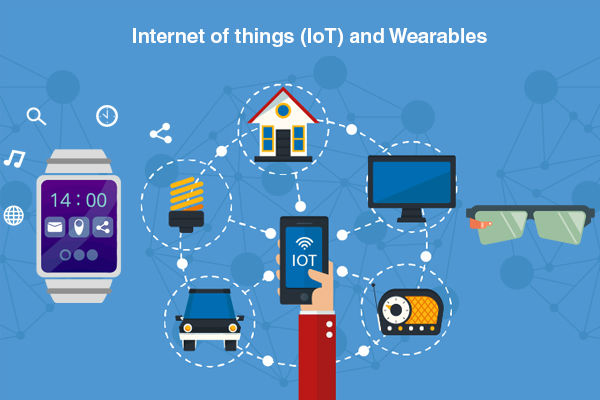
Meanwhile, smartphones have become an important part of the IoT ecosystem. Businesses can connect mobile applications with IoT devices to provide users with real-time information and remote control capabilities.
For example, a mobile application can allow users to monitor connected devices, receive alerts, view sensor data, or control smart equipment remotely.
Furthermore, businesses can use mobile app development services to create applications that work with IoT systems. Both Android and iOS platforms can support IoT-enabled applications, depending on project requirements.
As a result, mobile applications can make IoT systems more accessible and convenient for end users.
Future Scope of IoT Architecture
Looking ahead, IoT will continue to connect more devices, systems, and applications across different industries. At the same time, businesses will generate larger amounts of data and require scalable infrastructure to process it effectively.
Moreover, technologies such as artificial intelligence, machine learning, cloud computing, and edge computing can work alongside IoT. Together, these technologies can help organizations process information faster and develop smarter automated systems.
Consequently, IoT architecture can serve as an important foundation for connected business solutions. In addition, companies that understand their data, security, scalability, and connectivity requirements can build IoT systems that support long-term digital transformation.
IoT Development Services for Businesses
To build an effective IoT solution, businesses need careful planning, suitable technologies, secure connectivity, and scalable architecture. Before starting development, companies should evaluate their devices, data requirements, cloud infrastructure, applications, and analytics needs.
In this regard, IoT app development services can help businesses design connected applications and integrate IoT capabilities into their existing digital ecosystem.
Furthermore, Maxtra Technologies helps businesses explore IoT-based solutions according to their specific requirements. From connected applications to IoT integrations, the right technology approach can help organizations improve automation, monitoring, and data-driven operations.
Conclusion
In conclusion, IoT architecture connects devices, gateways, cloud platforms, and analytics systems to transform physical data into useful digital insights. Each layer performs an important role in the overall IoT ecosystem.
As a result, businesses can use IoT to automate processes, monitor operations, improve resource utilization, and make faster decisions. Additionally, cloud computing, mobile applications, AI, and advanced analytics can further strengthen IoT solutions.
Ultimately, as connected technologies continue to evolve, IoT architecture can help businesses build smarter, more connected, and data-driven operations.